Drafted for review. Last source review: 11 October 2026. No affiliate links are used in this article.
The hardest part of a trade job is often not the technical work. It is closing the gap between “finished” and “paid”. An electrician can leave a property with the fault fixed, the customer satisfied and the paperwork complete, yet still carry the cost of materials, labour and travel while waiting for an invoice to be raised, approved and settled.
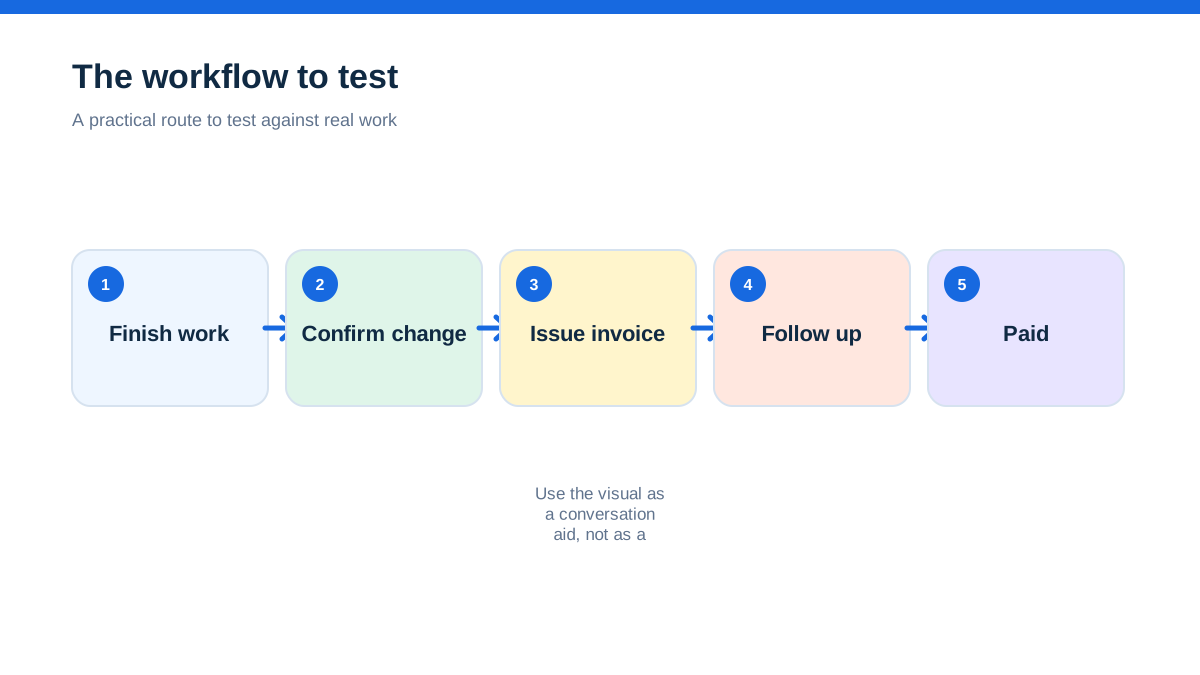
A reliable close turns the job into a clear financial record without making the customer feel processed. This guide follows one electrical job from the final check to the paid invoice. It covers what to confirm, what an invoice should contain, how to choose payment terms, how to follow up without creating friction and how to keep payment and tax records connected. It is practical guidance, not legal or tax advice. Check current HMRC rules and speak with an accountant when your VAT status, accounting method, customer contract or business structure makes the answer conditional.
The job that was finished but not closed
Picture a two-day lighting upgrade in a small office. The quoted work is complete, but one fitting changed after a conversation with the client. The electrician has a photo of the finished installation, a signed completion note and receipts for the additional materials. The client says the accounts team will pay once the invoice arrives.

The invoice is left until the end of the week. By then, the electrician remembers the variation but not the exact wording that was agreed. The invoice is addressed to the site contact rather than the legal customer. The purchase order number is missing. The accounts team returns it for correction, and the payment clock has not even begun.
Nothing about the electrical work failed. The cashflow process failed because completion was treated as a feeling rather than a controlled handover. A paid invoice begins with a complete job record while everyone still remembers what happened.
The aha: payment is designed at completion, not chased afterwards
The aha is that a payment chase is usually a delayed handover. If the invoice, reference, payment route and evidence are ready at completion, the customer has fewer reasons to pause. If the business waits, it turns a straightforward request into a reconstruction exercise.
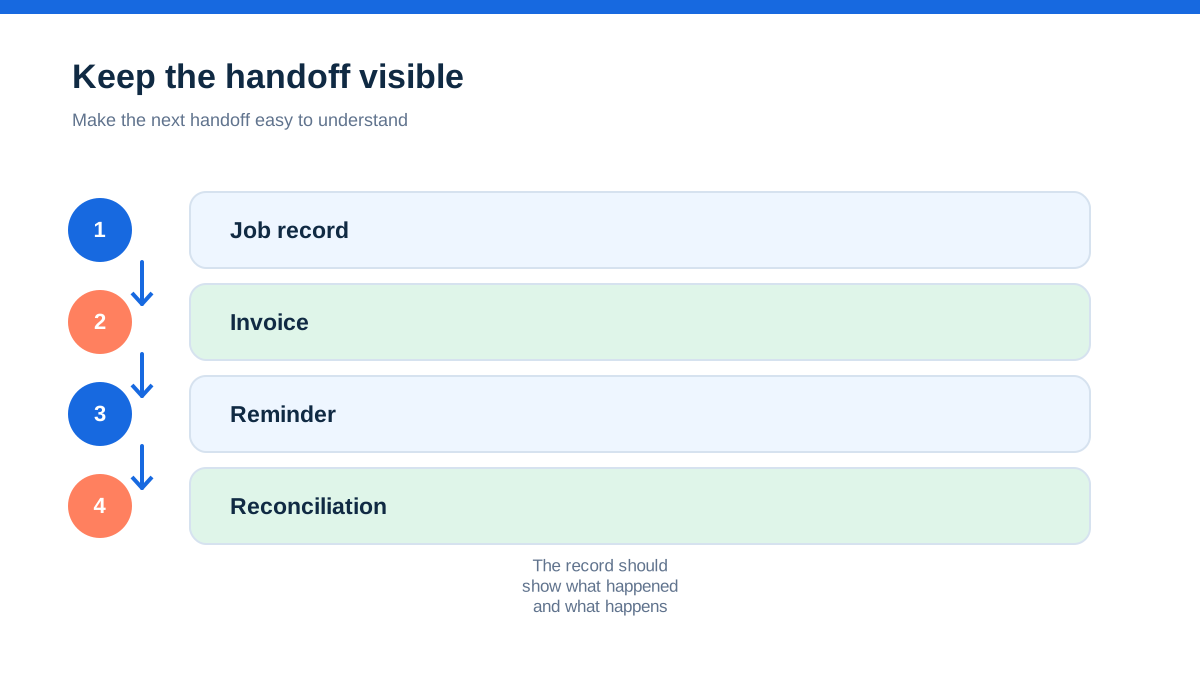
Design the close as a short conversation with four answers: what was supplied, what changed, what is owed and how can the customer pay? Those answers should appear in the job record and on the invoice. For a domestic customer, that may mean a plain description, total, bank details and a card link. For a commercial customer, it may mean a purchase order, cost code, named accounts address and an agreed due date.
This does not mean demanding immediate payment from every customer. It means making the agreed payment process visible before the van leaves. A clear process is more respectful than an unexpected message several weeks later asking whether an invoice was seen.
The handover starts with evidence, not a template
Before creating an invoice, gather the final evidence. Compare the original quote with the work actually supplied. List approved variations. Confirm whether a deposit or earlier part-payment exists. Add materials, labour, travel, testing or other agreed charges using the wording the customer will recognise.
Keep useful completion evidence with the job reference. This might include a signed completion note, a customer email approving a variation, test results, photographs, delivery records or a certificate. Not every document belongs on the invoice, and sending sensitive technical material to the wrong person can create its own problem. The invoice should describe the supply clearly; the supporting record should allow you to explain it if the amount is questioned.
For a commercial job, check the customer entity and purchase-order requirements before you issue. Ask who approves the invoice, which email accepts invoices, whether the customer uses a portal and what information appears on its remittance advice. A correct invoice sent to the wrong route can be just as delayed as an incorrect invoice.
Write a short completion note in your own words. For example: “Lighting upgrade completed on 11 October. Two additional fittings supplied and installed after client approval by email. Testing completed. Balance due under quotation T-104.” That sentence becomes the bridge between the technical job and the financial record.
The invoice has a legal baseline and a human job
Government guidance says an invoice must include a unique identification number, your company name, address and contact information, the customer's name and address, a clear description, the supply date, invoice date, amounts charged, VAT if applicable and the total owed.[1] Sole traders using a business name must also include their personal name and an address where legal documents can be delivered.[1]
The legal baseline is not the whole job. A customer also needs to know which work the amount relates to, which balance has already been paid, when payment is due and what to do if something is wrong. Use plain line items rather than “electrical works as discussed”. A useful description might identify the room or system, the main work completed and whether materials are included, without turning the invoice into a technical report.
Use a consistent invoice-number series. Do not reuse a number because a customer asked for a correction. If the original invoice is wrong, follow the accounting software's process for cancelling, crediting or replacing it so the record remains explainable.
Electronic delivery is acceptable when it meets the relevant requirements. HMRC says electronic invoices must contain the same information as paper invoices, and electronic records need to remain authentic, intact and legible.[5]
VAT is a decision held inside the invoice
If you are not VAT registered, do not add VAT simply because a template includes a VAT field. If you are VAT registered, the invoice must present the relevant VAT information for the supply. HMRC's VAT records guidance describes details for VAT invoices including the sequential number, time of supply, supplier VAT number, customer details, description, extent of services, VAT rate, amounts excluding VAT and total VAT in sterling.[4]
The tax point can matter when the invoice date and completion date differ. A payment received before the supply or invoice can also affect the relevant timing rules. Do not invent a tax treatment from a generic electrical invoice example. The correct result can depend on the work, customer, place of supply, VAT registration and accounting scheme.
The VAT registration threshold and other limits are changeable. HMRC's current VAT Notice 700/1 supplement should be checked when turnover approaches a threshold or when you consider voluntary registration.[8] Keep a review date in your process rather than relying on a figure copied into an old spreadsheet.
Payment-processing fees need separate treatment too. The customer owes the invoice total. A card provider may deduct its charge before the payout reaches your bank. Record the gross sale and the provider fee as separate entries, supported by the provider's receipt or tax document. Ask your accountant about the VAT treatment of the provider charge rather than assuming it matches the VAT on the electrical work.
The payment terms should match the customer and the job
Government guidance says you can set payment terms, including payment upfront or discounts for early payment. Unless a payment date is agreed, the customer must generally pay within 30 days of receiving the invoice or the goods or service.[2] That is a baseline, not a reason to leave terms vague.
Write the actual agreement on the quote and repeat it on the invoice. “Payment due within 7 days” is clearer than “prompt payment”. For a commercial customer, make sure the term fits the contract and purchase-order process. For a domestic customer, explain whether a deposit, staged payment or balance is due and when.
The term should reflect your exposure. A small repair may be payable on completion. A long installation may need a deposit for materials, staged applications or a final balance after agreed testing. Do not describe a deposit as a final invoice if it is not the final supply. The accounting and VAT consequences can differ, so get advice for the arrangement you use regularly.
If you offer an early-payment discount, document the amount, expiry and tax treatment correctly. Do not create an informal discount by changing an invoice total after the customer has paid. Use a credit note or other approved adjustment where the accounting record requires one.
A payment route removes one more excuse to delay
Put the preferred payment route where the customer can see it. For bank transfer, show the business name, sort code, account number, invoice reference and the exact amount. For card, use a provider or accounting-system payment link that identifies the invoice. For recurring maintenance, consider an authorised direct debit or bank-payment arrangement when it fits the customer and your agreement.
Keep payment choices limited and clear. Offering every method can make the invoice look uncertain, while offering only a method that many customers cannot use creates friction. A useful default for a small electrician is bank transfer plus one online option, with a card reader available when a customer wants to settle on site.
A payment provider does not remove the need to reconcile. Its payout may combine several invoices and subtract fees. Its settlement date may differ from the approval date. Its online receipt may use a transaction reference that the accounting system does not automatically import. Record the invoice number in the payment description where possible and keep the provider transaction ID.
Do not ask customers to send card numbers by email or text. Use the provider's secure flow. If a customer disputes a card payment, government guidance describes the chargeback risk and the importance of records, with higher risk for card-not-present transactions.[2]
The ten-minute completion routine
Create a short routine that can be carried out from the van or office. It is not a complicated ceremony. It is a repeatable check that protects both the customer relationship and the financial record.
Begin by opening the job and comparing the final work with the approved quote. Mark each variation as approved, rejected or unresolved. Add the final material and labour information. Confirm the customer entity, billing address, purchase order and accounts email. Attach the relevant completion evidence and note where the full technical record is stored.
Create the invoice with a unique number. Show the supply date and invoice date. Use precise descriptions and separate labour, materials or other agreed charges where that helps the customer verify the amount. Deduct deposits and part-payments. Check VAT settings and the final total. Add payment terms and a reference.
Preview the invoice as the customer will see it. Check the name, address, bank details, email, attachments, links and due date. Send it through the agreed channel. Save the sent record and note the time. If the customer has a portal, record the submission confirmation rather than relying on a screenshot alone.
Finally, set the follow-up date in the same job system. Do not leave the next action in your memory. The routine is complete when the invoice is sent, the evidence is findable and the next payment check has an owner.
Commercial customers need a clean accounts handover
Commercial customers often have more than one person in the job. The person who confirms completion may not be the person who approves the invoice. The accounts team may reject an invoice for a missing purchase order even when the site manager is satisfied.
Ask for billing requirements before work starts. Record the legal customer name, billing address, purchase-order number, cost code, portal, email and contact for queries. If the customer requires an application for payment, valuation or timesheet, put that requirement beside the job rather than discovering it at completion.
When the invoice is sent, include a short cover note with the job reference, completion date, approved variation and total due. Avoid emotional language and avoid sending a long technical narrative to an accounts inbox. Give the accounts team the information needed to approve the amount and the site contact a copy so the invoice has an internal advocate.
If a customer disputes one line, ask for the disputed point in writing and keep the undisputed amount visible. Do not erase the original invoice to make the dispute disappear. Correct the record through a documented credit note, revised invoice or agreed adjustment, with professional advice where VAT is involved.
The first reminder should be a service message
A reminder is less awkward when it follows the agreement. Send a polite confirmation shortly before the due date if the customer relationship or contract makes that sensible. After the due date, state the invoice number, original amount, due date and payment options. Ask whether the invoice reached the correct person and whether anything is blocking approval.
A useful message might say: “Invoice E-104 for the lighting upgrade was due on 18 October. Please confirm it is with the correct accounts contact. The outstanding balance is shown below, and bank details are on the invoice. If any line is queried, reply with the point and I will review it.” That is firm without pretending the customer is dishonest.
If another business pays late, statutory interest may be available. GOV.UK says statutory interest for late commercial payments is 8% plus the Bank of England base rate, unless a different contractual rate applies, and it explains that you can send a new invoice if you decide to add interest.[6] This is not a default message to send to every customer. Check the contract, customer type and current rate before applying it. Do not assume the same rule applies to a domestic consumer.
Keep a record of reminders, replies, disputes and promised payment dates. A promise to pay is not a bank receipt. Close the loop only when the payment is matched.
Reconciliation turns a promise into a paid record
When money arrives, match it to the invoice. Check the gross amount, payment date, reference, provider fee and net bank entry. If the customer pays several invoices in one transfer, allocate the amount deliberately and keep the remittance advice. If the payment is short, record the difference as an open issue rather than marking the invoice fully paid by guesswork.
For card payments, the provider report may be the bridge between the invoice and the bank. A £500 customer payment may appear as a lower bank deposit after a processing fee. The sales invoice remains £500, while the fee is a separate business expense. A refund, reserve or chargeback may arrive in a later payout and needs a visible connection to the original transaction.
For cash, issue a receipt and record the deposit. For a cheque, do not mark the invoice paid until the funds clear unless your accounting policy explicitly handles the risk another way. For a bank transfer with an unclear reference, identify it before allocating it to a customer.
Review an aged-invoice list at a regular time. Look for invoices that are sent but not viewed, viewed but unpaid, partly paid, disputed, overdue or paid but unreconciled. Each status needs a different action. One generic chase email cannot fix all of them.
Records protect the tax return and the relationship
HMRC says self-employed people need records of business income and expenses, including proof such as sales invoices, bank statements, receipts and bank slips.[3] It also explains that the accounting method affects when income and expenses are recorded. Under cash basis, income is generally recorded when money is received and expenses when paid, while traditional accounting uses invoice and bill dates.[3]
That difference matters for a job completed near the tax-year boundary or for an invoice that remains unpaid. Do not switch accounting method because a dashboard looks easier. Ask an accountant how the choice affects your business and whether you are eligible to use it.
VAT-registered businesses have additional record duties. HMRC says VAT invoices issued and received, credit notes and debit notes form part of the records, along with the VAT account and other relevant evidence.[4] Store the final invoice, any correction document, payment evidence and provider fee record under the same job reference.
Making Tax Digital for Income Tax is being introduced in stages for eligible sole traders and landlords. HMRC's current collection describes digital records, quarterly updates and the annual tax return requirements.[7] A compatible product can support the workflow, but the business still owns the accuracy of the records and the decision to use the right tax categories.
The paid-invoice audit you can run every Friday
Choose a fixed weekly time and export or review four lists: jobs marked complete, invoices sent, invoices overdue and payments received. Compare them. A completed job without an invoice is lost momentum. An invoice without a completion record needs evidence. A payment without an allocation needs investigation. An overdue invoice with no next action needs an owner.
Pick three jobs at random. For each one, find the quote, variations, completion note, invoice, payment record and any credit note. Confirm that the customer name, amount, VAT treatment and payment reference agree. Note the first place the chain breaks. Repair the process, not only the individual transaction.
Then review your next seven days of expected cash. Start with invoices due, not optimistic promises. Add expected deposits and subtract known provider fees, supplier bills, wages and tax reserves. Do not treat an unpaid invoice as cash available for a supplier payment.
Write one improvement for the following week. It might be adding a purchase-order field, making the invoice email automatic, collecting a deposit before ordering materials or changing the reminder owner. Test that improvement on the next completed job and keep the result.
This small review creates a feedback loop without requiring a complex finance department. It shows whether the job-close routine works in real conditions.
The correction should clarify the record, not hide it. Errors happen. A material line is duplicated, the customer name is wrong, the VAT code is inappropriate or the agreed variation was not included. The dangerous response is to overwrite history and hope the bank balance will explain the difference later.
Use the accounting product's documented process for voiding, crediting or replacing an invoice. HMRC's electronic-invoicing guidance says credit notes must contain the same details as the original invoice and enough information to identify it.[5] Tax adjustments may depend on the original tax point and the reason for the change, so ask your accountant when VAT is involved.
Tell the customer what changed. Reference the original invoice, explain the correction in one sentence and state the new balance and due date. If the customer already paid, show whether the adjustment creates a refund, credit or amount still due. Keep the approval for the correction with the job.
A clear correction protects trust. It also means someone reviewing the accounts later can distinguish a genuine change from an unexplained alteration.
The routine is successful when the invoice feels boring
A good completed-job-to-paid-invoice routine should become unremarkable. The customer receives a clear document, the accounts contact has what it needs, the payment route is obvious and the business can see what is due without searching through messages.
Use the completion moment to verify the scope, evidence, customer details, tax treatment and payment terms. Issue the invoice promptly. Record the follow-up. Match the payment and the provider fee. Review exceptions weekly. Seek advice when VAT, accounting method, contract terms or debt recovery make the answer conditional.
The goal is not to chase more aggressively. It is to remove the avoidable reasons a correct invoice sits unpaid. When the technical record, commercial agreement and financial record tell the same story, getting paid becomes part of finishing the job rather than an uncomfortable task left behind.
Affiliate status: no affiliate links are used on this page. Provider links are direct sources only, pending programme approval.